
The Hydraulic Concrete Pump is an essential piece of equipment in modern construction, designed to improve efficiency, stability, and precision in concrete placement. It is widely used in commercial and residential projects where consistent concrete delivery is required over short to medium distances. With its advanced hydraulic system and compact structure, it has become a practical choice for contractors seeking reliable performance on busy job sites.
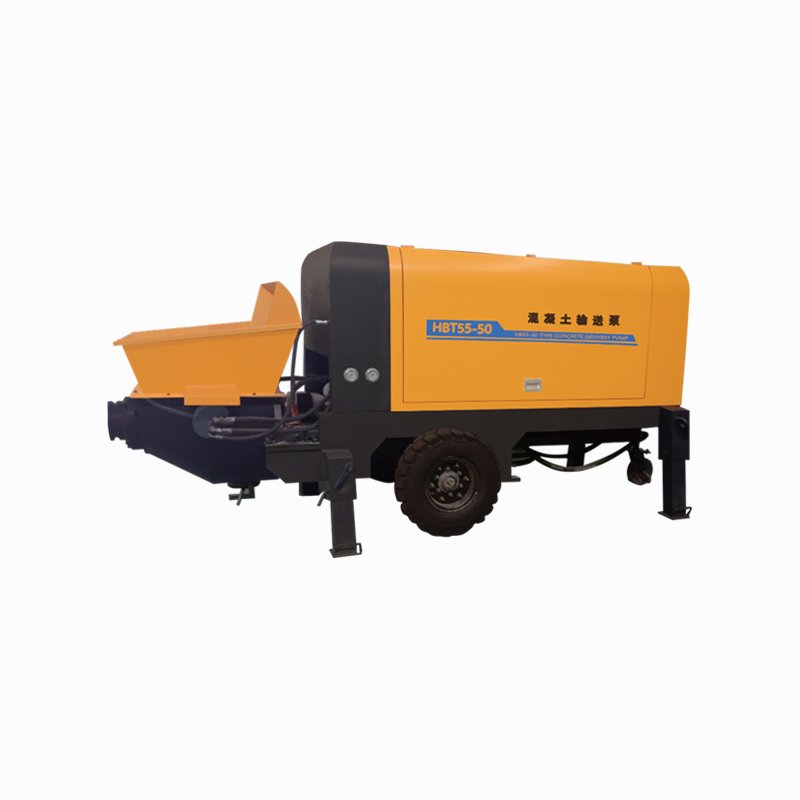
Efficient Concrete Pumping for Construction Work
One of the main advantages of the Hydraulic Concrete Pump is its ability to deliver concrete smoothly and continuously. It is designed for line pumping applications, making it suitable for transporting ready-mix concrete directly to the required location without frequent interruptions.
In practical use, it helps improve construction efficiency in several ways:
It reduces manual labor required for transporting concrete
It speeds up the pouring process for walls, slabs, and foundations
It ensures continuous flow during large-scale concrete work
It helps reduce material waste caused by delays or uneven placement
Because of these advantages, it is commonly used in projects where time and accuracy are critical.
Stable Hydraulic System for Consistent Performance
The hydraulic system is the core component of this machine, ensuring stable and reliable operation during construction tasks. It provides steady pressure output, which helps maintain uniform concrete flow throughout the pumping process.
Key benefits of the hydraulic system include:
Smooth and consistent pressure delivery
Reduced pulsation during pumping operation
Improved accuracy in concrete placement
Better performance under continuous working conditions
This stability is especially important in commercial projects where uneven concrete flow can affect structural quality.
Suitable for Commercial and Medium-Scale Projects
The Hydraulic Concrete Pump is widely used in various types of construction projects. It is particularly suitable for medium-scale and commercial applications where reliability and efficiency are required.
Typical applications include:
Building foundations and base structures
Concrete slabs for residential and commercial buildings
Columns and structural concrete components
Small to medium infrastructure construction projects
Its versatility makes it a valuable tool for contractors working across different job sites and project types.
Compact Design with Strong Working Capability
Another important feature of the Hydraulic Concrete Pump is its compact structure combined with strong pumping capacity. This allows it to operate efficiently even in limited or restricted job site conditions.
Its design offers several practical advantages:
Easy installation and operation in narrow construction spaces
Flexible positioning on different job sites
Strong pumping performance despite compact size
Reduced transportation and setup difficulty
This makes it especially useful in urban construction environments where space is often limited.
Improved Productivity and Cost Efficiency
By improving the speed and consistency of concrete delivery, the Hydraulic Concrete Pump helps contractors complete projects more efficiently. It reduces dependency on manual labor and minimizes delays during construction work.
The overall benefits include:
Faster project completion time
Lower labor and operational costs
Improved construction quality and consistency
Reduced downtime during concrete placement
These advantages make it a cost-effective solution for long-term construction use.
Conclusion
The Hydraulic Concrete Pump is a reliable and efficient solution for modern construction needs. With its stable hydraulic system, efficient line pumping capability, and compact design, it provides consistent performance across a wide range of commercial and medium-scale projects. For contractors seeking improved productivity and dependable concrete delivery, this equipment is a practical and valuable investment.