
A boom lift is a versatile type of aerial work platform designed to provide safe and flexible access to elevated working areas. Unlike traditional vertical lifts, boom lifts use an extendable or articulated arm to provide both vertical height and horizontal reach. They are widely used for construction, building maintenance, equipment installation, painting, facility repair, and other elevated work.
With different configurations available, choosing the right boom lift depends on the required working height, outreach, lifting capacity, operating environment, and mobility requirements.
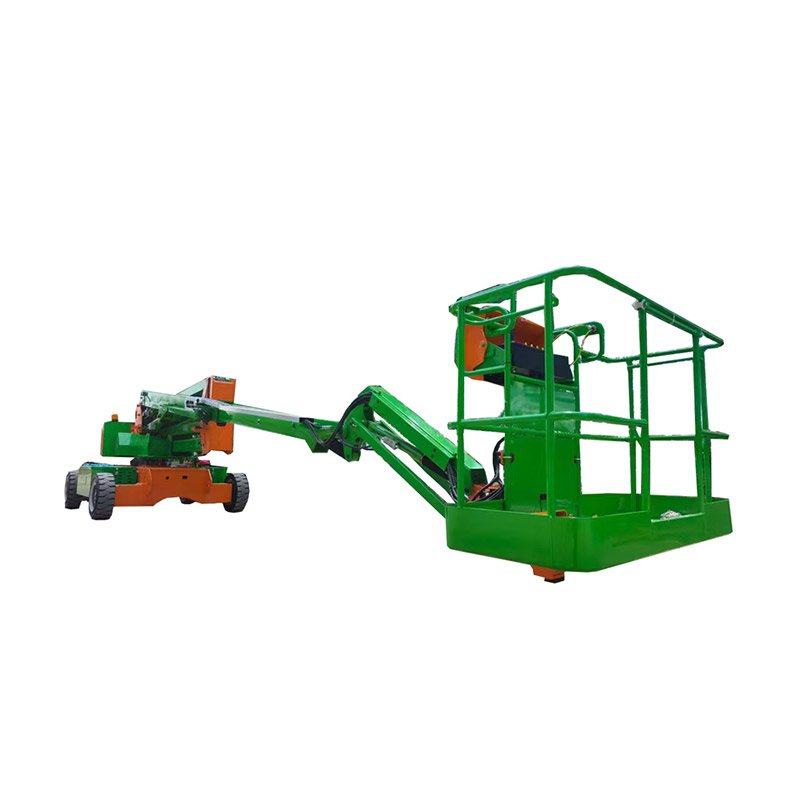
What Is a Boom Lift?
A boom lift is an aerial platform equipped with a lifting arm and a work platform or basket. The boom can extend upward and outward, allowing operators to reach areas that may be difficult to access with conventional lifting equipment.
Depending on the boom structure and power system, boom lifts can be divided into several common categories, including articulated boom lifts, telescopic boom lifts, electric boom lifts, and self-propelled boom lifts.
Types of Boom Lifts
Articulated Boom Lift
An articulated boom lift uses multiple connected boom sections that can bend and position the platform around obstacles. This design provides excellent flexibility for complex working environments.
Articulated boom lifts are commonly used for building maintenance, installation, painting, and indoor or outdoor facility repair where precise positioning is important.
Telescopic Boom Lift
A telescopic boom lift uses a straight, extendable boom to provide greater horizontal outreach and working height. It is particularly suitable for applications that require long reach and access to elevated areas from a distance.
These machines are often used in construction sites, industrial facilities, structural maintenance, and outdoor projects.
Electric Boom Lift
An electric boom lift is powered by a battery-driven electric system. It is a practical option for indoor applications and other environments where reduced emissions and controlled operation are important.
Electric models can provide smooth movement and are commonly used in warehouses, commercial buildings, factories, shopping centers, and facility maintenance.
Self-propelled Boom Lift
A self-propelled boom lift integrates the lifting system with a mobile chassis, allowing the machine to move independently around the worksite. This reduces the need for additional equipment when repositioning the aerial platform.
For projects requiring frequent movement between working locations, self-propelled operation can improve flexibility and overall work efficiency.
Electric Self-propelled Articulated Boom Lift
An Electric Self-propelled Articulated Boom Lift combines several useful features in one machine. The electric power system provides battery-powered operation, while the self-propelled chassis allows convenient movement around the job site. The articulated boom adds flexible up-and-over access for reaching difficult working areas.
This combination makes the equipment suitable for maintenance, installation, painting, lighting work, construction, and other applications where mobility and flexible positioning are required.
Common Boom Lift Applications
Boom lifts are used across a wide range of industries and work environments, including:
- Building Maintenance: Reaching elevated walls, windows, ceilings, and structural components.
- Construction: Supporting installation, inspection, finishing, and other elevated construction tasks.
- Lighting Installation: Accessing high lighting fixtures and electrical equipment.
- Painting and Decoration: Providing an elevated platform for exterior and interior finishing work.
- Facility Maintenance: Reaching ventilation systems, pipes, signs, machinery, and other elevated facilities.
- Industrial Applications: Supporting maintenance and repair work in factories, warehouses, and industrial plants.
How to Choose the Right Boom Lift
When selecting a boom lift, consider the specific requirements of the project. Working height and horizontal outreach are two of the most important factors, as they determine how far and how high the platform can reach.
The platform capacity should also match the operators, tools, and materials required for the job. For indoor applications, compact dimensions, electric power, and maneuverability may be more important. Outdoor projects may require greater reach, stability, and mobility.
The boom structure is another key consideration. Choose an articulated boom lift when flexible positioning around obstacles is required, while a telescopic boom lift may be more suitable for projects requiring long horizontal reach.
Find the Right Boom Lift for Your Application
From compact electric models to mobile self-propelled machines and long-reach telescopic boom lifts, different aerial work platforms are designed for different working conditions.
Whether you need an articulated boom lift, electric boom lift, self-propelled boom lift, or telescopic boom lift, selecting the right configuration can help improve access, mobility, and operational efficiency. Explore different boom lift solutions and choose the equipment that best matches your working height, reach, capacity, and application requirements.